
Failure
And the Importance of Our Response

Failure. How do you trace it? How do you sit with the feeling long enough to understand it? What happens if you don’t?
In the essay she published today (reproduced below), the brilliant Harshi Peiris, PhD offers a hopeful, uplifting fix for the broken system that governs scientific research. Instead of calling bad scientists narcissists, she argues that the solution lies in their formative training. I haven’t heard this idea anywhere else. Peiris holds a doctorate in biology.
Happy International Day of Education!
International Day of Education was January 26th. On this day, I want to celebrate education itself and the strides we have taken across disciplines to better humanity and the living world we depend on.

Education has helped us reduce suffering, extend life, understand ecosystems, create art, tell stories, build economies, govern societies, and imagine futures beyond survival. It has shaped science, medicine, politics, economics, environmental stewardship, literature, philosophy, history, mathematics, engineering, music, and the visual arts.
At its best, education creates balance.
It teaches us to hold progress and consequence together.
To understand both what we gain and what we risk.
To become not just more skilled, but more responsible as human beings.
That is what education should protect.
But we are living in a moment where education itself is increasingly questioned, politicized, and in some spaces openly attacked. Science is dismissed. Expertise is treated with suspicion. Humanistic values are reframed as weakness rather than wisdom.
In that context, celebration alone feels incomplete.
So today, I want to speak about an uncomfortable question from my own field, as a biologist. It is a question science rarely asks itself honestly:
Are we training scientists well?
Or are we training people who know how to sound like scientists?
That question is where this piece begins.

Science cannot Be Learned at a Distance.
Are we training scientists well?
Or, are we training people who know how to sound like scientists?
In biology, the distance between those two has become dangerous.
We talk about failure in science as a slogan.
Posters on lab walls.
Keynote soundbites.
“Failure is part of the process.”
But inside labs, failure is hidden, softened, or quietly outsourced.
Worse, our training systems actively reward avoiding failure rather than learning from it.
I have met countless PhD students and postdocs who advanced without knowing how to run their own experiments properly.
Technicians did the bench work.
Data appeared.
Figures were assembled.
When experiments failed, no one could explain why, because the person whose name was on the project had never learned how failure feels at the bench, how to trace it, how to sit with it long enough to understand it.
This is not a small skills gap. This is a collapse of scientific training.
You do not understand biology unless you have personally watched experiments fail, ruled out variables one by one, repeated them until they work, and understood why they finally did.
That knowledge cannot be delegated.
It cannot be PowerPointed.
It cannot be learned secondhand.

The Rise of the Articulate Scientist
At the same time, another figure has quietly risen.
The articulate scientist.
Confident speakers.
Fluent citations.
Always visible.
Good at meetings, networking, and staying in the room.
Often rewarded.
Often protected.
Often promoted.
But when data appeared, it floated.
Mechanisms were vague.
Experimental logic was thin.
When challenged, the answers sounded polished but hollow.
Meanwhile, others stayed late at the bench, repeating experiments, troubleshooting failures, carrying the intellectual weight of the work, and slowly burning out in silence.
This is not about personalities. It is about incentives.
We have built a system that confuses confidence with competence and visibility with rigor.
Reductionism as a Comfort Zone
Nowhere is this clearer than in molecular biology.
We train students to isolate single pathways, proteins, and readouts, often after the disease has already manifested.
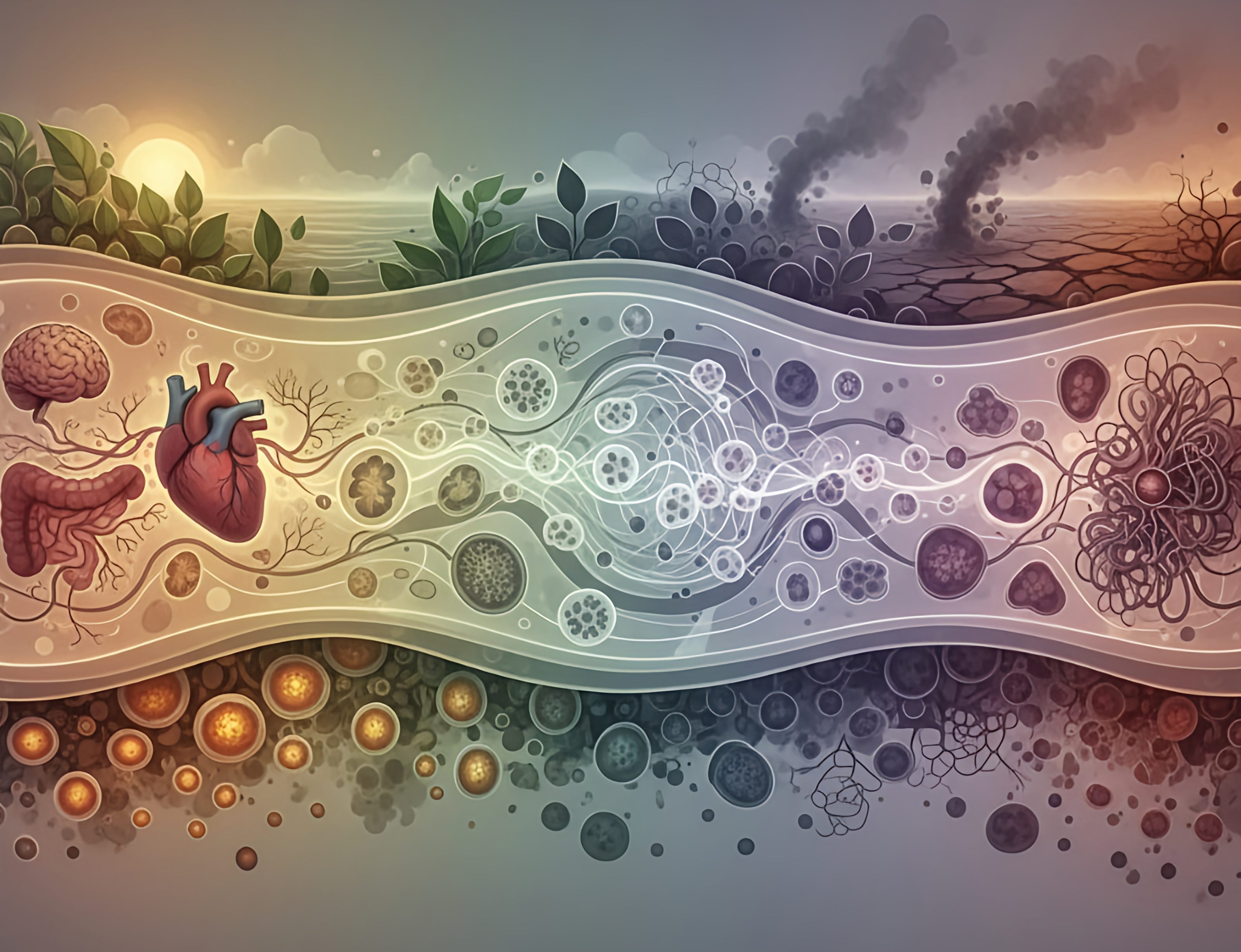
But most chronic diseases do not begin at diagnosis.
They begin decades earlier with slow, systemic shifts across metabolism, immunity, tissue communication, and time.
Studying a broken cell at the end tells you what failed.
It does not tell you how it failed.
Reductionist biology is not wrong.
It is necessary.
But it is not sufficient, and we train students as if it were the whole story.
Systems thinking, temporal biology, early disease modeling, and integrative reasoning are rarely taught at the bench level and even more rarely rewarded.
What We Do Not Teach
We do not teach students:
How to endure repeated failure without being labeled as incompetent
How to question dominant models when the data does not cooperate
How to think across scales instead of chasing single targets
How power, gender, and visibility shape careers more than rigor
Instead, we produce an imbalanced ecosystem:
A small group is doing the real experimental labor until they collapse
A larger group is learning how to survive without fully engaging
A system that rewards performance over understanding
Science Needs Re-Education
The so-called golden era of biology, which I attribute to the 1960s to 1980s, was not golden because the tools were better. The tools were, in fact, worse.
But it was golden because engagement was deeper, they worked hard on the bench, failure was tolerated, and thinking was not rushed into neat narratives.
Shielding students from failure is not kindness.
It is neglect.
If we want better science, education in biology must return to:
Hands-on rigor
Honest conversations about failure
Incentives that reward understanding, not optics
Acknowledgment of bias instead of pretending it does not exist
On this International Day of Education, the most important lesson may be this:
If we want science to change, we must change how scientists are trained.
And that starts with telling the truth, even when it is uncomfortable.
Dr. Harshi Peiris wrote this post. I’m subscribed to her newsletter; how about you?
I agree with what science should be but keep in mind that the junk we got from pharma and biology that medicine follows today came from the 70s on.
Most of the useful drugs were developed before the 80s.
After that, it became a shit show as pharma became more obsessed with profits than production.
The same could be said of the USSR which developed their best drugs in the 60s- early 80s. The collapse into finance capitalism broke their research just like it did in the west.
We shifted from industrial capitalism into RENTIER CAPITALISM which obsesses over numbers instead of productivity.
I hope the future returns us to research and development that is not controlled by corporations and banks.
Wow, the point about education teaching us to 'hold progress and consequence together' really hit home, making me curious how we implement such critical, balanced thinking when the very notion of expertise is treated like a bad algoritm in some circles.