
New Study Suggests COVID Boosters Reduce Transmission
Here's What It Actually Shows

“Protect your loved ones. Get your COVID-19 vaccine.”
“Protect your co-workers. Get vaccinated against COVID.”
Since 2021, we’ve been bombarded with the message that COVID vaccinations help prevent us from infecting the people we come into contact with.
A study published two weeks ago is adding fuel to the refrain.

I wondered what the study actually tells us. So I downloaded it as a PDF, unplugged the WiFi, put my phone on flight mode, and settled in for a good read.

Methods
In 2024, researchers began collecting data for the Respiratory Infection: Gauge of Household Transmission (RIGHT) SARS-CoV-2 Household Transmission Study. Outpatient clinics, urgent care clinics, and emergency departments in Tennessee, New York, and Washington identified 432 individuals with COVID-19.

362 met criteria for the study and consented to enroll. The study refers to them as primary case participants. These 362 primary case participants had 763 household contacts who met criteria.
Participants collected nasal swabs every day for 10 days. PCR test results were recorded. If at least one nasal swab tested positive, the participant was considered to be infected with SARS-Cov-2.

Results
One interesting statistic was that only 76.7% of household contacts with SARS-CoV-2 reported symptoms. In other words, 23.3% of family members who tested positive for SARS-CoV-2 did not have symptoms.
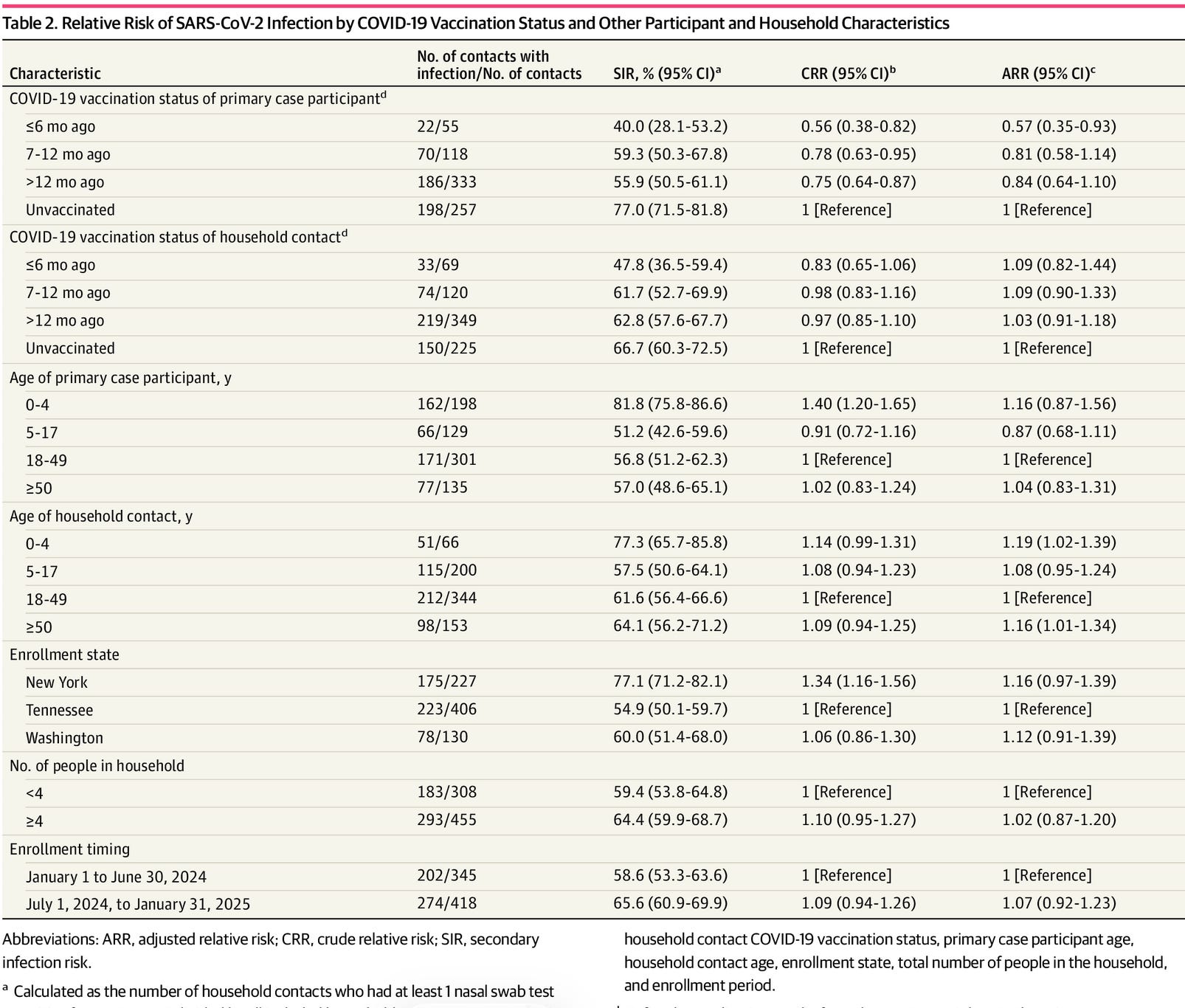
Another interesting statistic was that a full 47.8% of household contacts who had been vaccinated between 6 months and 2 weeks before enrollment tested positive for SARS-Cov-2.
As shown in Table 2 (below), participants who had received a COVID-19 vaccine within the past 6 months appeared to transmit the virus to 40% of their family members. Compare that with unvaccinated participants, on the other hand, who appeared to transmit the virus to a whopping 77% of their family members.
So getting a COVID-19 vaccine reduces the risk of transmitting SARS-Cov-2 to others. Right?
Not necessarily.
Observational, Not Interventional
First, this was a cohort study, not a randomized study. As such, we can't conclude the presence of a cause-effect relationship. A hidden factor could have contributed to the higher transmission by unvaccinated participants.

Who was left out?
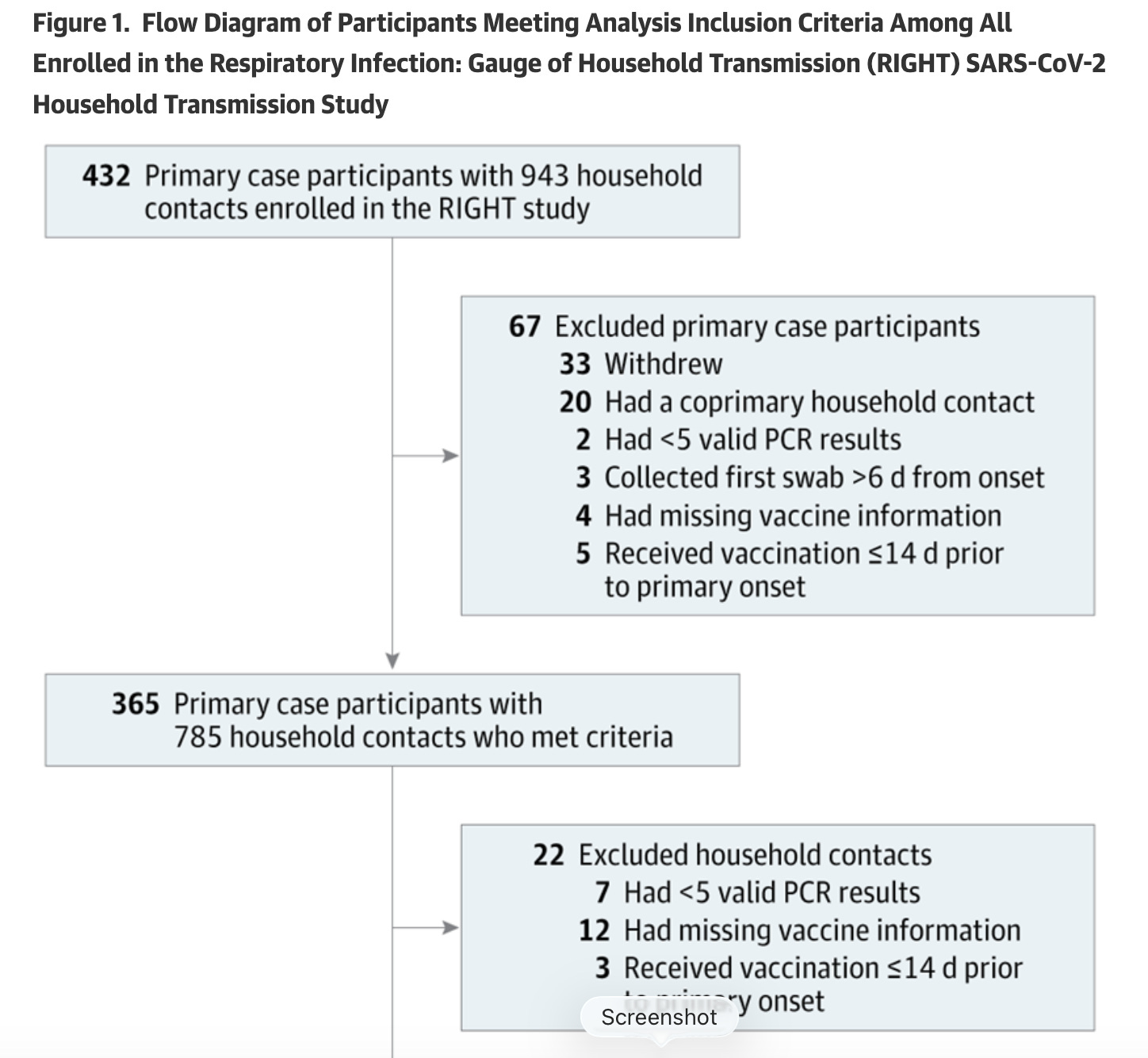
Figure 1 (the flow diagram of participants) does not break down the number of exclusions by vaccination status. This is true of participants excluded before the study began as well as those who dropped out. As a result, we don’t know if there was selection bias, even if unintentional.
Secondly, even though the study coordinators recorded the number of participants with chronic health conditions, there was no data on whether they were evenly distributed by vaccination status. This raises the question of whether chronic illness could have been a mediating factor.
Similarly, the results did not stratify data by geographic area (Tennessee, Washington, or New York) or by demographics. If one arm of the study or one ethnic group saw a significantly higher percentage of transmission, that could have been a clue that an unidentified factor was at play.
What’s the definition of unvaccinated?
Researchers described how they decided whom to count as “unvaccinated”:
Participants who did not have at least 1 verified vaccine dose or self-reported at least 1 vaccine dose with a vaccination date and either a vaccine manufacturer or vaccination location were considered unvaccinated.
They further explained how vaccinated participants were confirmed:
Study staff verified self-reported vaccination history using state immunization registries, electronic medical records, pharmacy records, and provider records.
In other words, participants could have been vaccinated but misplaced the documentation. They could have forgotten the date or the name of the manufacturer or the location. Or they could have simply left the question blank.
Figure 1 (above) reveals that 16 were excluded from the study for having missing vaccine information. This begs the question: when was a potential participant considered unvaccinated vs. excluded from the study for having missing vaccine information?

Little Nightmares
Another strange detail I noticed about the unvaccinated was that they accounted for 28.2% of participants. How on earth were study coordinators able to enroll such a high percentage of unvaccinated patients?
I found the answer in the Supplemental Online Content. It revealed that the majority of unvaccinated primary case participants were four years of age or younger. This was not true for the vaccinated primary case participants.
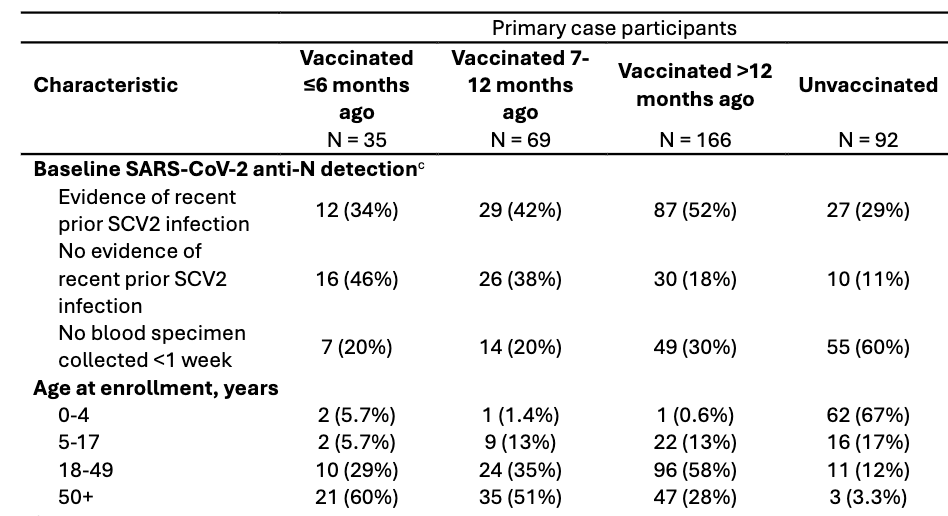
Table 2 (the first table in this article) corroborates this. Where the age of the primary case participant was 0-4, 81.8% of the household contacts were infected. On the other hand, where the age of the primary case participant was 5-17, 18-49, or 50+, the secondary infection rates were 51.2%, 56.8%, and 57%, respectively.
So another way of interpreting this study is that toddlers were more likely to transmit SARS-CoV-2 than any other age group.
Why do you think this may be?
The corresponding figures for Crude Relative Risk (CRR), in Table 2 up above, tell the same story. Among primary case participants aged 0-4, the CRR for transmission was 1.4. Among primary case participants aged 5-17, 18-49, and 50+, on the other hand, the CRR was 0.91, 1, and 1.02, respectively.

The Adjusted Relative Risk (ARR), also in Table 2, further confirms my observation. Among primary case participants aged 0-4, the ARR of transmission was 1.16. When the primary case participants were aged 5-17, 18-49, or 50+, however, the ARR was 0.87, 1, and 1.04, respectively.
The abstract does not mention this.
Which vaccines?
The paper did not distinguish between vaccines manufactured by different pharmaceutical companies.
Funding Sources
One of the researchers reported receiving grants to her institution from the CDC during the conduct of the study and grants to her institution from AstraZeneca, Pfizer, and GSK and personal fees from Merck, Moderna, Pfizer, Meissa Vaccines, and GSK outside the submitted work.
Another researcher reported receiving consultant fees from Merck, GSK, and the CDC.
In my personal opinion, the financially strapped JAMA could do better than the honor code in reporting researchers’ conflicts of interest. For every scientist who discloses her conflicts of interest honestly, how many are stretching the truth?
I used AI once for this article: to look up the budget of the American Medical Association. Their IRS form 990 revealed that in 2023, the AMA’s revenue was more than $468 million. With that amount of money, can’t they afford a fact checker to verify such crucial information?

Just a thought.
TL;DR
This cohort study found that household contacts of COVID-19 patients vaccinated in the past 6 months were significantly less likely to test positive for SARS-Cov-2 than household contacts of unvaccinated patients.
However, most of the unvaccinated primary case participants were 4 years or younger, whereas most of those vaccinated in the past 6 months were 50 or older.
Not mentioned was the fact that family members were much more likely to contract SARS-CoV-2 when the primary case participant was aged 4 or younger.
In addition, the criteria for being excluded or counted as unvaccinated were characterized by irregularities.
Finally, since this study wasn’t randomized, we don’t know whether the association was due to a reason other than vaccination (such as the age of the COVID patient).
References
Benist SC, Smith-Jeffcoat SE, Talbot HK, et al. Recent COVID-19 vaccination and risk of SARS-CoV-2 transmission. JAMA Netw Open. 2026;9(5):e2612609. doi:10.1001/jamanetworkopen.2026.12609